The Aave Governance Rift: Wintermute and DAO Tensions
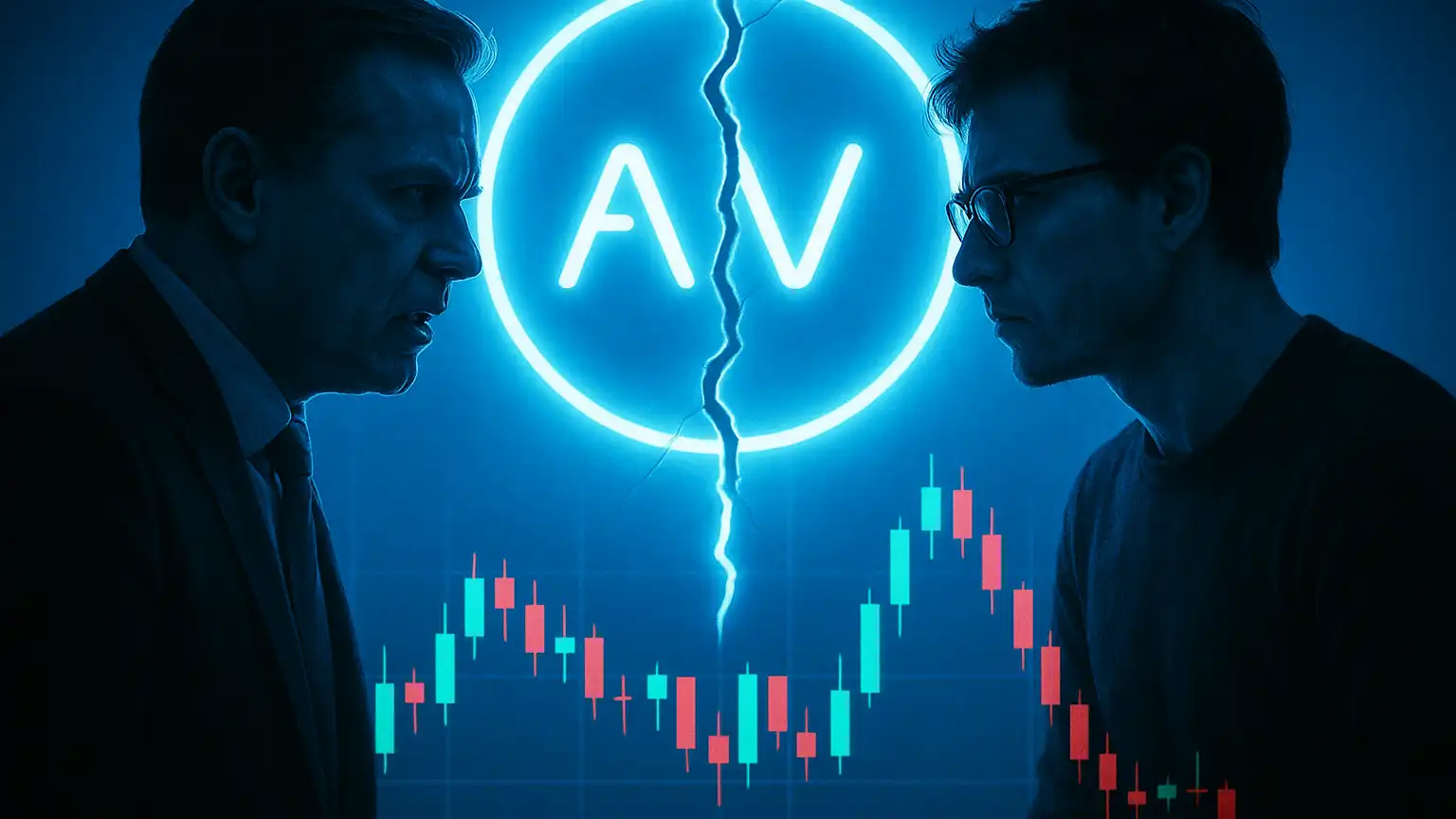
The Growing Opposition to Aave’s Token Alignment Proposal
Recently, a significant governance dispute has emerged within the Aave Decentralized Autonomous Organization (DAO).
The contention centers around a proposed token alignment plan that has sparked fierce opposition, notably from Wintermute, a major trading firm.
Wintermute’s founder and CEO, Evgeny Gaevoy, publicly voiced the firm’s disapproval of the proposal, citing insufficient clarity on critical governance issues
and the potential misalignment of strategic priorities.
This opposition highlights deeper conflicts within the Aave community concerning governance, strategic direction, and value distribution.
Wintermute’s Objections: In Depth
In a detailed commentary, Gaevoy emphasized that the proposal lacks transparency around its structure and governance ramifications.
He argued that it demands a large-scale commitment from tokenholders without providing a clear roadmap or tangible outcomes, which poses significant risks.
Wintermute, although an investor in AAVE since 2022, underscores the absence of equity ties with Aave Labs, ensuring their critique remains focused purely on governance.
This move reflects broader concerns about the governance model’s ability to effectively balance the interests of various stakeholders, an issue that has been simmering for some time.
Value Accrual and Mismatched Expectations
At the core of Wintermute’s objection lies the issue of value accrual. There’s a discord between Aave Labs and certain AAVE tokenholders around value distribution and the operation of external functions such as business development.
Wintermute perceives an expectation mismatch over how value should be captured, with unresolved tensions potentially making the proposal premature and detrimental.
This reflects a broader question frequently debated in decentralized finance: who should capture financial gains and how should these be distributed across the ecosystem?
The Political Climate and Its Effects on AAVE
Gaevoy criticized the political climate enveloping the Aave proposal. He acknowledged issues in communication, particularly by Aave founder Stani Kulechov, but noted that the backlash against Aave Labs has potentially undermined investor sentiment,
contributing to a decline in the AAVE token’s market value. The accusations of ‘hostile takeovers’ have further polarized the community, exacerbating tensions and complicating a reasonable resolution of the disputes.
Gaevoy’s call for a ‘temperature check’ underscores the need for de-escalation and constructive engagement, rather than focusing solely on whether the proposal passes or fails.
Current State of Aave’s Governance and the 2026 Vision
The ongoing governance conflict significantly impacts how Aave plans to execute its ambitious 2026 roadmap.
This roadmap aims to vastly expand Aave’s platform capabilities and footprint. Kulechov’s vision includes key innovations such as the Aave V4 to improve liquidity, Horizon to integrate with institutional finance, and a consumer-facing app to broaden user engagement.
However, the strategic goals outlined in this plan are now facing scrutiny within the community, potentially stalling ambitious developments if governance issues persist unresolved.
The Road to Aave V4: Enhancing Liquidity
A central pillar of Aave’s 2026 roadmap is the expected launch of Aave V4. This update aims to reduce liquidity fragmentation, a common issue plaguing many decentralized finance platforms,
by streamlining capital flows within the ecosystem.
However, achieving this requires cohesive collaboration among participants, something that the current governance rift threatens to destabilize.
Without alignment on foundational governance principles, the full realization of Aave V4’s potential could be hindered.
Horizon: Bridging Traditional Finance
Another significant endeavor is Horizon, targeting institutional users by allowing them to leverage tokenized real-world assets for new finance solutions.
As companies explore innovative ways to combine blockchain with traditional assets like US Treasuries, it’s vital that the governance structure can support such forward-looking ventures.
The ongoing debate adds uncertainty to Horizon’s potential rollout and highlights the need for a governance model that is both adaptive and robust to support these developments.
The Aave App: Expanding User Adoption
The Aave App aims to attract millions of users by simplifying access to decentralized finance products.
Strategically, it represents Aave’s commitment to broadening adoption beyond traditional crypto-native audiences.
Yet, efforts to expand user bases depend on successfully resolving current governance impasses to assure potential users and stakeholders of Aave’s stability and vision.
Without doing so, there’s a risk that internal discord might negatively impact user confidence and adoption.
Conclusion: A Turning Point for Aave’s Governance
As the Aave DAO deliberates on the token alignment proposal, the outcome stands to influence the future of Aave’s governance and strategic direction.
The current opposition led by entities like Wintermute has thrust the need for a recalibrated governance framework into the spotlight.
Moving forward, the focus must be on constructive dialogue, equitable value distribution, and transparency to unite the community for the greater good of the Aave ecosystem.
Only with an aligned vision and cooperative spirit can Aave continue to pioneer and uphold its role in the ever-evolving crypto landscape.